Tester di penetrazione all'impatto:
Una guida completa ai suoi utilizzi e benefici
Tester di penetrazione all'impatto GT‑C33 è uno strumento di laboratorio tessile specializzato, noto principalmente per la sua applicazione nel controllo qualità tessile, nella produzione di abbigliamento e nella validazione di tessuti tecnici. Con una combinazione unica di flusso di lavoro di test standardizzato, risultati quantitativi oggettivi e un'ampia adattabilità dei materiali, questo tester è particolarmente adatto agli ambienti in cui le prestazioni di resistenza alla pioggia dei tessuti devono essere valutate con precisione in condizioni di spruzzatura d'acqua a impatto.
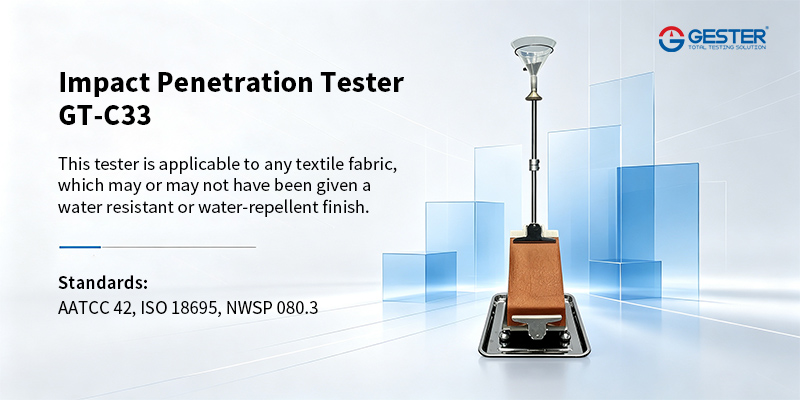
Principio di funzionamento e specifiche principali
|
Standard Code |
Descrizione standard |
|
AATCC 42 |
Test di resistenza all'acqua dei tessuti tramite penetrazione per impatto |
|
ISO 18695 |
Tessili — Determinazione della resistenza alla penetrazione dell'acqua, test di penetrazione per impatto |
|
ISO 9073-17 |
Tessili — Metodi di prova per tessuti non tessuti |
|
NWSP 080.3 |
Standard per tessuti non tessuti per la misurazione della penetrazione dell'acqua di tipo a impatto |
Vantaggi dell'attrezzatura per prove di penetrazione a impatto GT‑C33
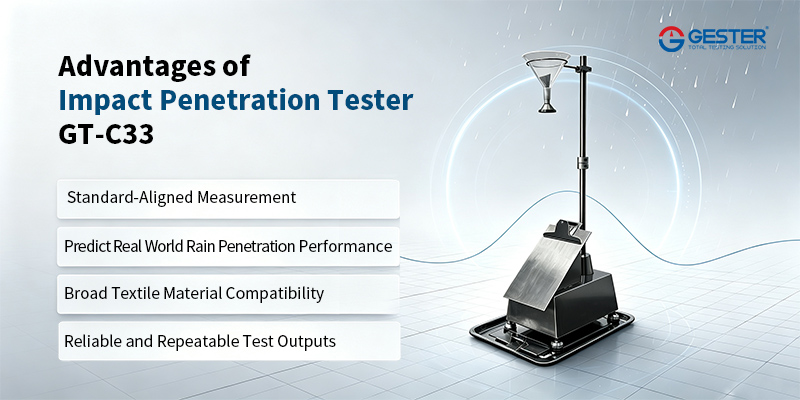
Misurazione allineata agli standard
Fornisce dati di test allineati agli standard globali di testing dei tessili.
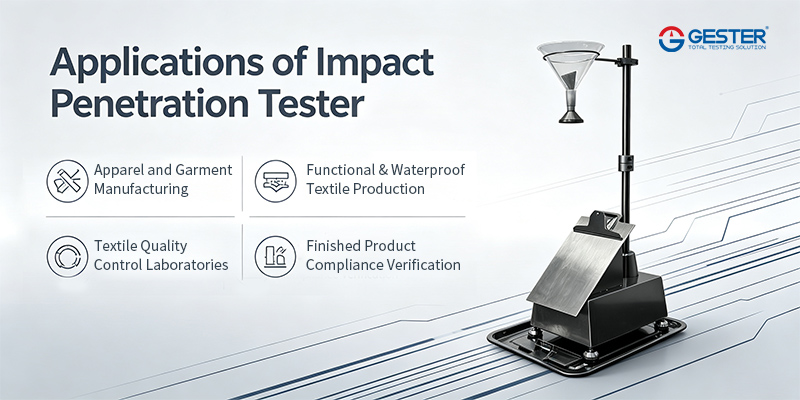
Produzione di abbigliamento e indumenti
L'Impact Penetration Tester GT‑C33 offre dati quantitativi affidabili sulla resistenza alla penetrazione dell'acqua dei tessuti per abbigliamento, rendendolo adatto per l'ispezione di materiali per abbigliamento antipioggia e outdoor. È ampiamente utilizzato dalle fabbriche di abbigliamento in cui le prestazioni di resistenza alla pioggia del tessuto sono un fattore decisivo per la qualità del prodotto finale.Impact Penetration Tester vs. Hydrostatic Head Tester
Apparecchio per la prova della penetrazione per impatto contro apparecchio per la prova della resistenza allo spruzzo
FAQ
Qual è il costo tipico di approvvigionamento per Impact Penetration Tester GT-C33?
Il costo per tester di penetrazione per impatto dell'acqua GT-C33non è fisso, proprio come qualsiasi altro strumento di analisi di laboratorio, poiché possiede configurazioni meccaniche uniche conformi agli standard. Per i costi specifici, è consigliabile rivolgersi a un fornitore.
In che modo il tester di penetrazione per impatto si confronta con altri strumenti per il test di resistenza all'acqua dei tessuti?
Vale la pena evidenziare che il penetration tester a impatto fornisce risultati quantitativi sul peso della penetrazione in condizioni di spruzzo d'impatto ed è conforme alle norme AATCC 42, ISO 18695 e NWSP 080.3 rispetto a molti noti strumenti di prova per tessuti ad acqua.
Quale strumento è migliore per prevedere le prestazioni di penetrazione della pioggia nel tessuto: ImpactPenetrometer Tester o Hydrostatic Head Tester?
Impact Penetration Tester offre un risultato migliore per la previsione della penetrazione della pioggia, in quanto simula le condizioni di pioggia con spruzzi d'impatto. Il tester per prevalenza idrostatica è più semplice da utilizzare per i test di resistenza alla pressione statica, ma offre una capacità limitata di riprodurre scenari reali di impatto della pioggia.
Quali sono i parametri di test principali per Impact Penetration Tester GT‑C33?
Impact Penetration Tester GT‑C33 utilizza un volume di acqua di prova di 500 ml, una distanza ugello-provino di 600 mm, un'inclinazione del provino di 45 gradi e un morsetto di tensionamento da 453,6 g per mantenere il provino teso durante il test. Questi parametri sono fondamentali per soddisfare gli standard internazionali di riferimento.
In che modo la specifica del penetration tester per l'acqua influisce sulle prestazioni del test?
Le specifiche meccaniche fisse e il flusso di lavoro operativo conforme agli standard di questo particolare tester di penetrazione all'acqua per impatto consentono di ottenere dati ripetibili sull'aumento di peso della carta assorbente, da utilizzare laddove la valutazione affidabile della penetrazione della pioggia nel tessuto costituisca il requisito fondamentale.
Quali sono le proprietà uniche del tester di penetrazione a impatto GT‑C33 per i test sui tessuti per abbigliamento?
L'Impact Penetration Tester GT‑C33 viene utilizzato per applicazioni su tessuti per abbigliamento grazie alla sua capacità di simulare l'impatto dell'acqua simile alla pioggia e di misurare quantitativamente la penetrazione dell'acqua, il che è necessario per prevedere le prestazioni di resistenza alla pioggia nel mondo reale dei tessuti indossabili.
Come si confrontano i risultati del penetrometro a impatto con quelli di altri dispositivi di prova di resistenza all'acqua in termini di affidabilità dei dati?
Il test di impatto a spruzzo dei tessuti non tessuti genera risultati di misurazione quantitativi dell'aumento di peso della carta assorbente, che sono oggettivi per la valutazione della penetrazione dell'acqua per impatto. Esso integra anziché sostituire altri strumenti di prova di resistenza all'acqua per una valutazione completa dei materiali tessili.


 italiano