Dispositivo di prova di trazione per tessuti non tessuti:
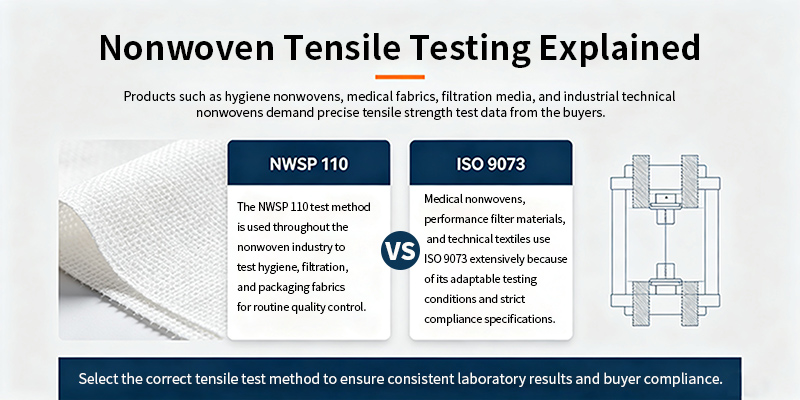
NWSP 110 contro ISO 9073
1. Spiegazione delle prove di trazione sui tessuti non tessuti
Perché le prove di trazione sui tessuti non tessuti sono così importanti per i moderni prodotti in tessuto non tessuto
I moderni prodotti in tessuto non tessuto ad alte prestazioni sono diventati davvero esigenti a causa di risultati imprecisi delle prove di trazione, che portano al rigetto del prodotto, a prestazioni di durata incoerenti e al fallimento degli audit di conformità.
Prodotti come i tessuti non tessuti per igiene, i tessuti medicali, i mezzi di filtrazione e i tessuti non tessuti tecnici industriali richiedono dati precisi sui test di resistenza alla trazione da parte degli acquirenti.
I materiali in tessuto non tessuto moderni ed esigenti richiedono sistemi di prova di trazione davvero avanzati che mantengano un'accuratezza del ±2% con un'ampia gamma di capacità di carico.
Perché gli standard sono importanti nelle decisioni di acquisto
I 2 principali sistemi normativi universalmente accettati per determinare le proprietà meccaniche dei tessuti non tessuti sono NWSP 110 e ISO 9073. Sebbene entrambi questi sistemi di prova mirino a valutare le prestazioni a trazione, lacerazione e scoppio, alcune differenze possono portare a variazioni nei risultati di misurazione, principalmente a causa di differenze nella velocità di prova, nella preparazione dei campioni e nel metodo di misurazione del carico.
Pertanto, per gli esportatori e i responsabili del controllo qualità, è molto importante selezionare il metodo di prova di trazione migliore e corretto per ottenere risultati in linea con altri laboratori e che soddisfino i requisiti degli acquirenti.
Cosa dovrebbero sapere gli acquirenti prima di acquistare uno strumento
Prima di acquistare uno strumento per le prove di trazione dei tessuti non tessuti, è necessario conoscere innanzitutto le basi sulle proprietà di trazione, sui calcoli del carico e dell'allungamento e sulle differenze tra i test secondo NWSP 110 e ISO 9073.
2. Proprietà di trazione nei tessuti non tessuti
Definizione di resistenza alla trazione per i tessuti non tessuti
Resistenza alla trazione dei tessuti non tessuti: La resistenza alla trazione dei tessuti non tessuti è definita dalla forza massima che un tessuto può sopportare quando viene allungato a una velocità costante di estensione fino alla rottura, insieme al corrispondente allungamento a rottura.
I risultati della trazione possono essere espressi in diverse unità di misura e, di norma, vengono misurati ed espressi in N/5cm, kN/m o persino in percentuale di allungamento (%). Il test di trazione viene eseguito a velocità di allungamento costante, che può variare da 10 mm/min fino a 500 mm/min.
I laboratori moderni impiegano il dispositivo di prova di trazione per tessuti non tessuti per il test di trazione dei tessuti non tessuti. I risultati ottenuti sono ripetibili e l'accuratezza dei risultati è pari o superiore a ±2%. Ciò elimina il più possibile l'errore umano.
Perché la resistenza alla trazione influisce sulle prestazioni del prodotto
La resistenza alla trazione non corretta influisce negativamente sulla durata strutturale, sulla sicurezza dell'applicazione e sulle prestazioni di conformità.
I sistemi intelligenti del dispositivo di prova di resistenza alla trazione dei tessuti migliorano notevolmente la ripetibilità e riducono anche i costi di ripetizione dei test grazie alla regolazione automatica della velocità e alla autocalibrazione.
3. Perché le prove di trazione sui tessuti non tessuti sono così importanti
Prestazioni dei tessuti non tessuti igienici e medicali
Le prove di trazione altamente accurate sono fondamentali nei tessuti non tessuti igienici e medicali perché determinano l'efficacia con cui il materiale mantiene l'integrità strutturale durante l'uso.
Una sufficiente resistenza alla trazione del tessuto non tessuto migliora le prestazioni anti-rottura, riduce il rischio di guasto e migliora anche la sicurezza dell'utente. I tessuti non tessuti leggeri per igiene mirano normalmente a valori di trazione bilanciati per garantire sia la resistenza che la morbidezza.
Ottimizzazione della durata e delle prestazioni
I test avanzati aiutano i produttori a trovare il giusto equilibrio tra resistenza alla trazione, morbidezza e costo di produzione, che è davvero essenziale per i prodotti in tessuto non tessuto di qualità destinata all'esportazione.
Applicazioni industriali e di imballaggio dei tessuti non tessuti
I tessuti non tessuti industriali e i tessuti per imballaggio controllano la resistenza alla trazione in modo da bilanciare la capacità di carico e le prestazioni di lavorazione. Una resistenza alla trazione eccessivamente elevata riduce la morbidezza del tessuto, mentre una resistenza alla trazione insufficiente causa il cedimento strutturale durante l'applicazione.
Il bilanciamento tra resistenza alla trazione e flessibilità
I moderni sistemi di macchine per prove di trazione utilizzano il controllo automatico della velocità per garantire una misurazione del carico altamente costante e una migliore coerenza dei test nei tessuti non tessuti spalmati e accoppiati.
4. Quali sono le differenze tra NWSP 110 e ISO 9073?
NWSP 110 contro ISO 9073
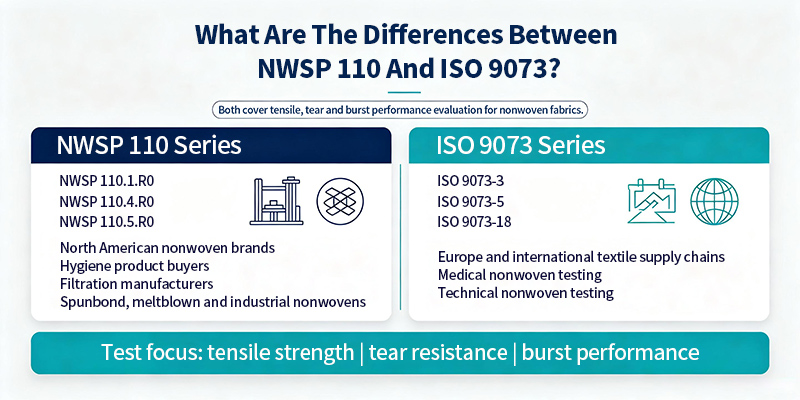
Il test per la misurazione delle proprietà meccaniche dei materiali in tessuto non tessuto è coperto da due principali sistemi normativi: la serie NWSP 110 e la serie ISO 9073. Entrambe coprono la valutazione delle prestazioni a trazione, lacerazione e scoppio per i tessuti non tessuti.
I risultati dei test sono notevolmente influenzati dalle differenze nella velocità di prova e nelle regole di preparazione dei campioni. Le moderne apparecchiature di prova possono misurare facilmente le proprietà di trazione dei tessuti non tessuti. È possibile programmarle per conformarsi agli standard internazionali per il test di questa proprietà.
Panoramica di NWSP 110
Ampiamente utilizzato in Nord America
La serie NWSP 110 (inclusi NWSP 110.1.R0, NWSP 110.4.R0, NWSP 110.5.R0) è ampiamente utilizzata come standard dai marchi nordamericani di tessuti non tessuti, dagli acquirenti di prodotti per l'igiene e dai produttori di filtri. Viene comunemente applicata ai prodotti in tessuto non tessuto spunbond, meltblown e anche industriale.
NWSP 110.4.R0 (20)
Nonwovens Standard Procedure 110.4.R0‑2020: Resistenza a trazione e allungamento (metodo a striscia)
NWSP 110.5.R0 (20)
Nonwovens Standard Procedure 110.5.R0‑2020: Resistenza alla lacerazione (lacerazione trapezoidale)
NWSP 110.1.R0 (20)
Nonwovens Standard Procedure 110.1.R0‑2020: Massa Faticata (Massa per Unità di Superficie)
Le Condizioni di Prova Standard
Il test di trazione standard NWSP 110.1 (metodo a striscia) viene condotto a una velocità costante di 300 mm/min e i risultati sono espressi come forza in termini di N/5cm o lbf/in. La serie copre anche i metodi di prova di lacerazione trapezoidale e scoppio a sfera.
Le Applicazioni Industriali Comuni
Il metodo di prova NWSP 110 viene utilizzato in tutta l'industria dei tessuti non tessuti per testare tessuti per igiene, filtrazione e imballaggio per il controllo qualità di routine.
Panoramica della norma ISO 9073
Lo Standard Internazionalmente Preferito
La serie ISO 9073 (inclusi ISO 9073-3, ISO 9073-4, ISO 9073-5, ISO 9073-18) è ampiamente utilizzata come standard in Europa e nelle catene di approvvigionamento tessile internazionali, in particolare per i test sui tessuti non tessuti medicali e tecnici.
ISO 9073‑3
Tessili — Metodi di prova per tessuti non tessuti — Parte 3: Determinazione della resistenza a trazione e dell'allungamento
ISO 9073‑4
Tessili — Metodi di prova per tessuti non tessuti — Parte 4: Determinazione della resistenza alla lacerazione
ISO 9073‑5
Tessili — Metodi di prova per tessuti non tessuti — Parte 5: Determinazione della resistenza allo scoppio a sfera
Le Impostazioni di Prova Flessibili
La norma ISO 9073 offre molteplici opzioni di velocità, con 100 mm/min che è la più comunemente utilizzata per il test di trazione su striscia. Questo offre anche una migliore flessibilità per i tessuti non tessuti leggeri e ad alte prestazioni moderni.
L'Applicazione dei Tessuti Non Tessuti Tecnici
I tessuti non tessuti medicali, i materiali filtranti ad alte prestazioni e i tessuti tecnici utilizzano ampiamente la norma ISO 9073 grazie alle sue condizioni di prova adattabili e alle rigide specifiche di conformità.
5. Come scegliere un dinamometro per tessuti non tessuti
Dinamometro per Tessuti Non Tessuti
Un dinamometro per tessuti non tessuti dipende principalmente dal carico di lavoro del laboratorio, dai requisiti di conformità e dalle prestazioni a lungo termine.
I laboratori di controllo qualità ad alto volume preferiscono i sistemi automatici perché migliorano la ripetibilità durante i test di trazione e riducono anche la dipendenza dall'operatore.
I Tester Manuali rispetto a quelli Automatici
Dinamometro Universale per tessuti non tessuti esegue automaticamente il controllo della velocità, la misurazione del carico e anche la reportistica in tempo reale, mentre i sistemi manuali richiedono frequenti regolazioni. I sistemi automatici migliorano la velocità e la precisione dei test.
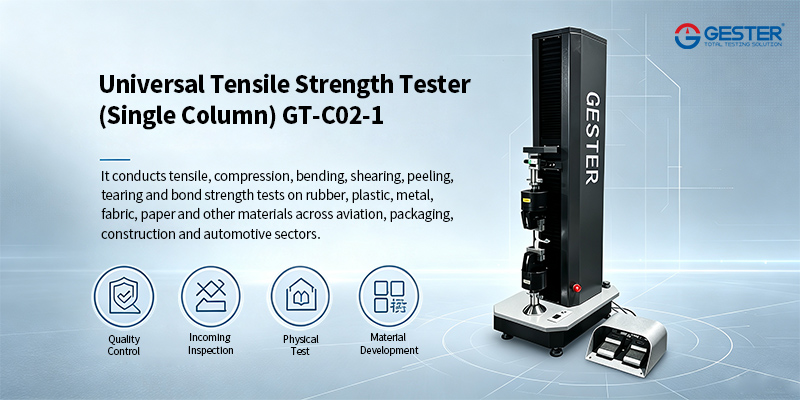
Il dinamometro universale GESTER è progettato per eseguire prove di trazione, compressione, flessione, taglio, resistenza all'incollaggio, pelatura, lacerazione e altre prove su gomma, plastica, pelle, metallo, filo di nylon, filato, tessuto, carta, componenti aeronautici, materiali di imballaggio, materiali da costruzione, prodotti petrolchimici, componenti elettrici, parti automobilistiche e altri materiali. Funziona come attrezzatura di base per il controllo qualità, l'ispezione in arrivo, i test fisici, la ricerca meccanica e lo sviluppo dei materiali.
Il nostro dinamometro per tessuti adotta un sistema di azionamento a servomotore AC, riduttore, puleggia sincrona e componenti a vite a ricircolo di sfere di precisione TBI, in modo che la traversa dello strumento si muova dolcemente con bassa rumorosità e alta precisione di estensione.
Questo dinamometro per tessuti adotta un guscio a colonna in alluminio, con trattamento di iniezione a polimerizzazione ad alta temperatura sulla superficie della macchina che non sbiadirà mai.
Mantenimento di una Velocità Stabile e di una Precisione del Carico
La velocità di prova stabile e la precisione del carico sono davvero cruciali per la conformità alle norme NWSP 110 e anche ISO 9073; i sistemi moderni mantengono una precisione del ±2%.
Questo dinamometro per tessuti non tessuti adotta molti tipi di misure di protezione:
- Dispositivo di protezione dei finecorsa della traversa
- Dispositivo di protezione contro il contatto dei morsetti
- Protezione software per spostamento e carico
- Protezione da sovraccarico del sensore
- Protezione del software di caricamento dei campioni
- Protezione da sovracorrente e sovratensione
Esegue la supervisione in tempo reale delle parti principali, rendendo la macchina più sicura e affidabile durante il funzionamento.
Dispositivi di fissaggio e morsetti intercambiabili
L'alt్రుavanzato Universal Tensile Strength Tester supporta molteplici dispositivi per prove di trazione, lacerazione, scoppio e pelatura, coprendo varie strutture di tessuti non tessuti e altri materiali.
Contattaci per una dimostrazione o una consulenza gratuita
Per ulteriori informazioni sui metodi di prova dei tessuti non tessuti, sugli standard e sulle macchine per test di Nonwoven Fabrics, contattaci:
Tel : +86-595-28886108
Email : marketing@gester-instruments.com


 italiano