Calibro di spessore per non tessuti:
ISO 9073-2 vs NWSP 120.6.R0 (15)
Perché il test di spessore è così importante per i non tessuti
I materiali non tessuti ad alte prestazioni sono diventati davvero critici a causa di risultati di test di spessore imprecisi, che portano al rifiuto del prodotto, a prestazioni funzionali incoerenti e al fallimento degli audit di conformità.
Prodotti come non tessuti igienici, tessuti medicali, mezzi filtranti e non tessuti tecnici richiedono dati precisi sui test di spessore da parte degli acquirenti. I moderni prodotti in non tessuto, molto esigenti, richiedono sistemi di test di spessore davvero avanzati che mantengano un'elevata precisione con un campo di misura fino a 20 mm per varie strutture di non tessuto.
Perché gli standard sono importanti nelle decisioni di acquisto
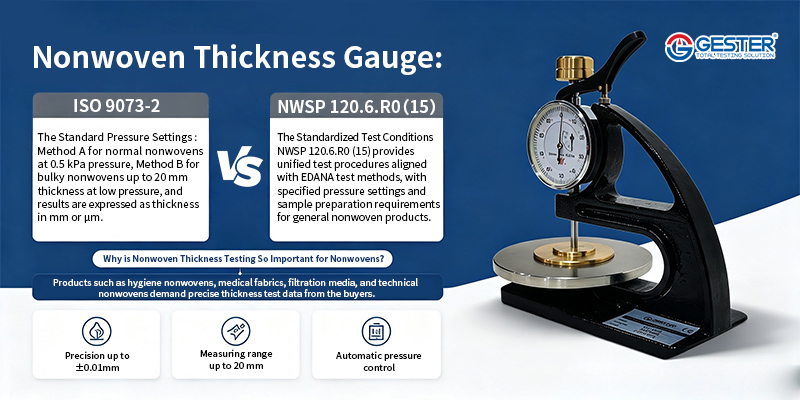
I 2 principali standard accettati a livello internazionale per determinare lo spessore dei tessuti non tessuti sono ISO 9073-2 e NWSP 120.6.R0 (15). Sebbene entrambi questi test mirino a determinare lo spessore del non tessuto, alcune differenze possono portare a variazioni nei risultati di misurazione, principalmente a causa di differenze nella pressione di prova, nella procedura di campionamento e nel tipo di materiali non tessuti applicabili.
Quindi, per gli esportatori e i responsabili del controllo qualità, è molto importante selezionare il metodo di test di spessore migliore e corretto per ottenere risultati in linea con altri laboratori e che soddisfino i requisiti degli acquirenti.
Cosa dovrebbero sapere gli acquirenti prima di acquistare un misuratore di spessore per tessuti
Prima di acquistare un misuratore di spessore per tessuti, dovresti prima conoscere le basi sulla misurazione dello spessore dei tessuti, le impostazioni della pressione di prova e le differenze tra i test secondo ISO 9073-2 e NWSP 120.6.R0 (15).
Test di spessore nei materiali non tessuti
Definizione di spessore del non tessuto
Spessore dei non tessuti: lo spessore dei tessuti non tessuti è definito dalla distanza tra la faccia e il retro di un non tessuto, misurata come la distanza tra una piastra di riferimento su cui poggia il non tessuto e un piedino pressore parallelo che applica una pressione specificata al materiale.
Lo spessore può essere espresso in diverse unità e, di norma, viene misurato ed espresso in mm, μm o anche mil. Il test di spessore viene eseguito a una pressione costante e questa può variare da 0,1 kPa fino a 0,5 kPa per la maggior parte dei prodotti in non tessuto.
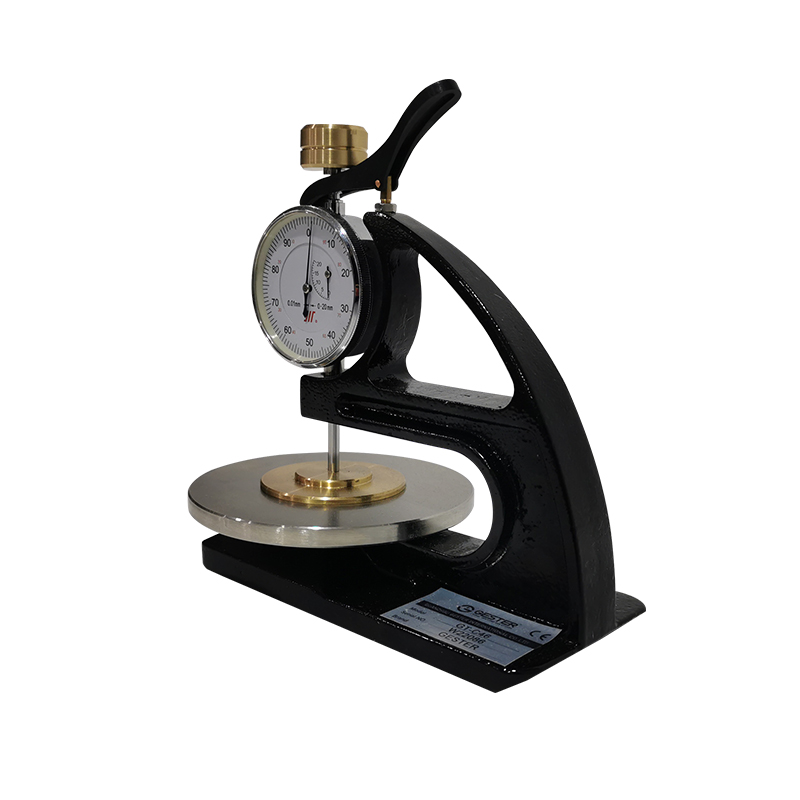
I laboratori moderni impiegano il più recente calibro di spessore per non tessuti per il test di spessore dei non tessuti. I risultati ottenuti sono ripetibili e l'accuratezza dei risultati è di ±0,01 mm o superiore. Ciò elimina l'errore umano il più possibile.
Come lo spessore si relaziona alla struttura del non tessuto
Lo spessore del non tessuto dipende davvero dalla finezza della fibra, dal metodo di legame del velo, dalla densità apparente, dallo spessore del rivestimento e anche dalla distribuzione dei pori.
Le strutture ad alto spessore e bassa densità mostrano valori di spessore più elevati, mentre le strutture calandrate compatte creano uno spessore inferiore con una densità maggiore. Nei prodotti tecnici come i non tessuti per filtrazione e medicali, è essenziale mantenere l'equilibrio dello spessore e anche le prestazioni di protezione e assorbimento.
Alcuni termini correlati
La densità apparente è la massa per unità di volume di un non tessuto, calcolata dal peso di base e dallo spessore. La comprimibilità indica il grado di riduzione dello spessore sotto una pressione aumentata, e il loft si riferisce alla proprietà soffice e ad alto volume dei non tessuti voluminosi.
Perché la coerenza dello spessore influisce sulle prestazioni del prodotto
Il valore di spessore errato influisce negativamente sulla capacità di assorbimento, sull'efficienza di filtrazione, sulle prestazioni di isolamento e sulle prestazioni di conformità.
Perché il test di spessore del non tessuto è davvero importante
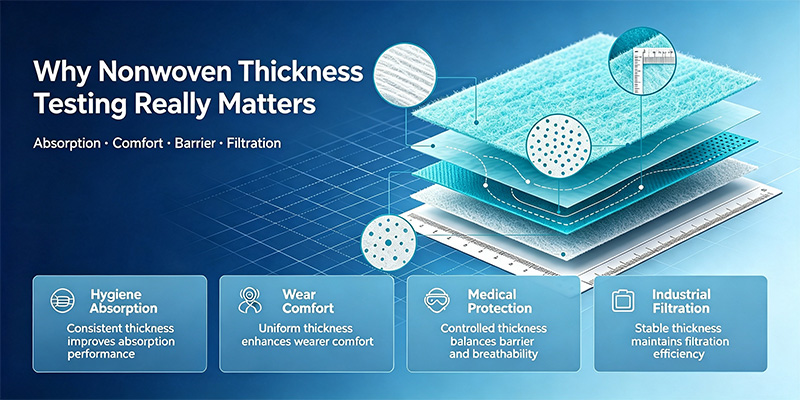
Prestazioni dei non tessuti igienici
Il test di spessore altamente accurato è fondamentale nei prodotti igienici perché determina quanto efficacemente il materiale assorbe e trattiene i liquidi e quanto risulta confortevole a contatto con la pelle.
Uno spessore costante del non tessuto migliora le prestazioni di assorbimento, riduce il rischio di perdite e migliora anche il comfort di chi lo indossa. I non tessuti per lo strato superiore (top sheet) mirano normalmente a valori di spessore uniformi per garantire prestazioni di trasferimento dei liquidi costanti.
L'ottimizzazione dell'assorbimento e del comfort
Il test avanzato aiuta i produttori a trovare il giusto equilibrio tra spessore, morbidezza e capacità di assorbimento, il che è davvero essenziale per prodotti igienici di qualità da esportazione.
I non tessuti medicali e protettivi
I non tessuti medicali controllano lo spessore in modo che le prestazioni di barriera e la traspirabilità siano bilanciate. Uno spessore eccessivo può ridurre la traspirabilità, mentre uno spessore ridotto può compromettere la protezione della barriera.
L'equilibrio tra spessore e barriera
I sistemi di calibro di spessore per non tessuti utilizzano il controllo automatico della pressione per garantire una misurazione dello spessore del tessuto altamente coerente e una migliore coerenza dei test nei non tessuti rivestiti e laminati.
Le applicazioni di filtrazione e non tessuti industriali
I mezzi filtranti, i geotessili e i non tessuti industriali richiedono uno spessore controllato per mantenere l'efficienza di filtrazione e anche la stabilità strutturale. Uno spessore costante del non tessuto è davvero critico per le prestazioni di filtrazione e anche per la conformità alla sicurezza.
Quali sono le differenze traISO 9073-2 e NWSP 120.6.R0 (15)?
ISO 9073-2 vs NWSP 120.6.R0 (15)
Il test per la misurazione dello spessore del tessuto è coperto da due standard principali, ISO 9073-2 Tessili — Metodi di prova per non tessuti — Parte 2: Determinazione dello spessore e NWSP 120.6.R0 (15) Spessore del non tessuto.
Panoramica della ISO 9073-2
Ampiamente utilizzato in Europa e nelle catene di approvvigionamento globali
ISO 9073-2 è ampiamente utilizzato come standard dai marchi di abbigliamento europei, dai produttori di prodotti per l'igiene e dagli acquirenti di tessuti non tessuti tecnici. Viene comunemente applicato ai tessuti non tessuti normali, ai tessuti non tessuti voluminosi e ai prodotti in tessuto non tessuto industriale.
Le impostazioni di pressione standard
Il test di spessore standard ISO fornisce molteplici metodi di prova: Metodo A per tessuti non tessuti normali a una pressione di 0,5 kPa, Metodo B per tessuti non tessuti voluminosi fino a 20 mm di spessore a bassa pressione, e i risultati sono espressi come spessore in mm o μm.
Panoramica di NWSP 120.6.R0 (15)
Lo standard preferito dal Nord America e dall'industria
NWSP 120.6.R0 (15) è ampiamente utilizzato come standard in Nord America e nelle catene di fornitura dell'industria globale dei tessuti non tessuti, in particolare per i test su prodotti per l'igiene, filtrazione e tessuti non tessuti industriali.
Le condizioni di prova standardizzate
NWSP 120.6.R0 (15) fornisce procedure di prova unificate allineate ai metodi di prova EDANA, con impostazioni di pressione specificate e requisiti di preparazione del campione per prodotti in tessuto non tessuto generici.
Come scegliere uno spessimetro per tessuti non tessuti
Uno spessimetro per tessuti non tessuti dipende principalmente dal carico di lavoro del laboratorio, dai requisiti di conformità e dalle prestazioni a lungo termine.
I laboratori di controllo qualità ad alto volume preferiscono i sistemi automatici perché migliorano la ripetibilità durante i test di spessore e riducono anche la dipendenza dall'operatore.
I calibri manuali rispetto a quelli automatici
Lo spessimetro digitale per tessuti non tessuti esegue automaticamente il controllo della pressione, il riconoscimento del piedino pressore e anche la reportistica in tempo reale, mentre i sistemi manuali richiedono frequenti regolazioni del peso. I sistemi automatici migliorano la velocità e la precisione dei test.
Mantenimento di una pressione stabile
La pressione stabile di 0,5 kPa e altri valori specificati è davvero cruciale per la conformità a ISO 9073-2 e anche a NWSP 120.6.R0 (15); i sistemi moderni mantengono un controllo della pressione ad alta precisione.
Conclusione
Esistono due metodi di prova per lo spessimetro per tessuti non tessuti. Entrambi i metodi testano lo spessore di un provino, ma vi sono notevoli differenze nelle pressioni di prova e nelle condizioni di prova per i due metodi, pertanto i risultati saranno diversi e forniranno informazioni differenti.
Contattaci per una demo gratuita o una consulenza
Per ulteriori informazioni sui metodi di prova dei tessuti non tessuti, sugli standard e sulle macchine per prove tessili, contattaci per un supporto professionale.
WEB: www.gester-instruments.com
EMAIL: marketing@gester-instruments.com


 italiano